There are no trains in Santiago Xanica. There are only buses, dirt roads, and the quiet realization that you’re off the map.
The Rail That Isn’t There
Let’s address the elephant in the room, or rather, the locomotive that is decidedly absent. If you are planning a trip to Santiago Xanica, a small municipality nestled in the Sierra Sur of Oaxaca, Mexico, with the romantic notion of hopping on a scenic railway, you need to recalibrate your expectations immediately. There is no train station here. There is no rail line cutting through the cornfields. There is no vintage steam engine puffing up the hillside to deposit you at a quaint platform.
Santiago Xanica is not a stop on the Mayan Train. That massive infrastructure project is thousands of kilometers away in the Yucatán Peninsula, serving a completely different demographic and geography. The town is a rural community in the Miahuatlán District, with a population that fluctuates between a few hundred and three thousand depending on who is counting and whether they are including the surrounding hamlets. In places like this, the railway is a historical ghost. It is a relic of a time when heavy industry might have considered the Sierra Sur worth the investment. It didn’t. The mountains won.
This absence is a feature of the landscape. The terrain here is rugged, steep, and resistant to the straight lines that engineers love. To say that Santiago Xanica lacks train travel is to say that a mountain lacks a swimming pool. It’s technically true, but it misses the point of the geology. The "train" you are looking for is the bus. It is the battered, colorful colectivo that winds its way up the switchbacks, carrying locals, produce, and the occasional lost tourist who has misread a map. It is slower, bumpier, and infinitely more honest than any rail service ever could be.
How You Actually Get There
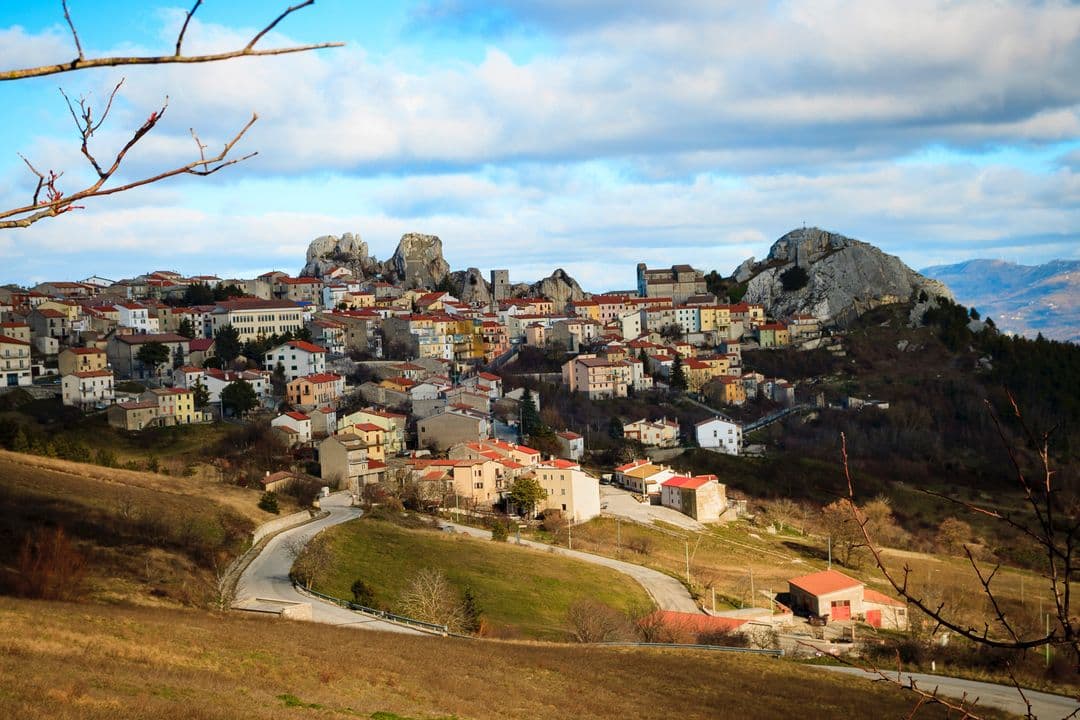
Since the rails end long before you reach the Sierra Sur, your journey to Santiago Xanica is a study in patience and connection. Most travelers begin in Mexico City, the sprawling metropolis that serves as the transit heart of the country. From there, the options are limited but functional. Rome2Rio, a useful if sometimes overly optimistic aggregator, lists six transport options from Ciudad de México to Santiago Xanica. Those six options are variations of bus transfers, private transfers, and rental cars.
The standard route involves a long-distance bus from Mexico City to Oaxaca City, the state capital. This leg of the journey is comfortable enough, with modern coaches offering air conditioning and reclining seats. From Oaxaca City, the adventure begins. You must transfer to a local bus or colectivo heading toward the Miahuatlán District. These vehicles are smaller, often older, and driven with a confidence that suggests the driver has memorized every pothole and hairpin turn. The final leg to Santiago Xanica may require a walk, a hitchhike, or a negotiated ride with a local driver.
This transit system is designed for connectivity. The buses run on schedules that are more suggestive than strict. A "9:00 AM" departure might mean the bus leaves when it is full, or when the driver decides to leave, or when the sun has risen sufficiently to illuminate the road. You learn to wait. You learn to watch the horizon for the dust cloud that signals arrival. You learn that in rural Oaxaca, time is not measured in minutes, but in arrivals and departures.
The Landscape of Connection
Without the rail line to anchor the town to a national network, Santiago Xanica exists in a state of deliberate isolation. The Sierra Sur is one of the most remote regions in Mexico, known for its dense vegetation, steep slopes, and strong indigenous Zapotec culture. The lack of rail infrastructure has preserved this isolation. It protects the community from the homogenizing forces of mass tourism. There are no tour buses disgorging passengers onto a platform. There are no souvenir shops selling trinkets to people who have just stepped off a train.
Instead, the connection is human. The bus stop, if you can call it that, is likely a painted line on the side of the road or a simple signpost. People gather there not just to travel, but to socialize. They share news, gossip, and plans for the day. The arrival of the bus is an event. It brings supplies from the city—coffee, sugar, hardware—and takes away produce, crafts, and sometimes people seeking opportunity elsewhere. It is a lifeline, not a luxury.
This reality shapes the visitor’s experience. You are a guest. You are entering a community that does not rely on you for its survival, but which welcomes you with the cautious curiosity of those who are rarely visited. You are expected to be polite, to be patient, and to respect the local rhythms. You are not here to conquer the distance; you are here to understand it.
Practicalities for the Railless Traveler
Planning a trip to Santiago Xanica requires a shift in mindset. You cannot book a train ticket. You cannot check a departure board. You must rely on local knowledge and flexibility. The best time to visit, according to general travel guides for the region, is during the winter months, from November to April. This period offers clear skies and cooler temperatures, a welcome respite from the humidity of the coastal lowlands. The dry season also makes the roads more passable, reducing the risk of being stranded by mud or landslides.
Money is cash. Cards are not widely accepted in rural Oaxaca, and ATMs are scarce. Bring enough pesos for your journey, your meals, and your accommodation. Prices are low, but so is the margin for error. If you run out of cash, you are out of luck. Accommodation is similarly basic. There are no luxury hotels, no five-star resorts. You will stay in a casa particular, a small guesthouse, or a local inn. The amenities are simple: a bed, a fan, and a roof that keeps the rain out. The value is in the authenticity, not the comfort.
Safety is generally good, but vigilance is necessary. The region is remote, and help is not always close at hand. Travel in daylight. Avoid walking alone at night. Respect local customs and dress modestly. Learn a few phrases of Zapotec or Spanish. A smile and a greeting go a long way. You are a visitor. Act like it.
When to Go and Who It’s For
Santiago Xanica is for the slow traveler. It is for the curious, the patient. It is for those who want to see Mexico beyond the resorts and the ruins. It is for those who understand that travel is about connection.
The next major holiday in Mexico is Independence Day on September 16, 2026. While Santiago Xanica may celebrate, it is unlikely to be overrun with tourists. The crowds will be local, the festivities authentic. Revolution Day on November 16, 2026, is another date to note, but again, the impact on travel logistics is minimal. The best time to go is when you are ready to disconnect.
How long should you stay? Two to three days is sufficient to get a feel for the place. Longer if you want to truly settle in. Use the time to walk, to talk, to listen. There are no landmarks to check off, no museums to visit. There is only the landscape, the people, and the quiet satisfaction of being somewhere that does not need you to be there, but is glad you are.
FAQ
Is there a train station in Santiago Xanica? No. There is no railway service in Santiago Xanica. The nearest major transit hubs are in Oaxaca City, from where you must take a bus or private transfer.
How do I get from Mexico City to Santiago Xanica? You must take a bus from Mexico City to Oaxaca City, then transfer to a local bus or colectivo to the Miahuatlán District, and finally to Santiago Xanica. The journey takes several hours and requires flexibility.
What should I bring? Cash in Mexican pesos, comfortable walking shoes, rain gear (even in the dry season), and a sense of humor. Leave the expectation of convenience at home.