Phalombe tests your legs against granite slopes. The air is thin, the paths steep, and the reward is silence.
The road from Blantyre to Phalombe demands patience. As the minibuses—known locally as matolas—climb out of the lowlands, the air cools. It is a physical shift, a drop in temperature that signals you have entered the shadow of Mount Mulanje. Here, the landscape is not flat. It rises. It dominates. For the cyclist, the ride requires a negotiation with gravity.
Phalombe is a small town, a regional centre that serves as a gateway rather than a destination in itself. It is a holding space for strangers pretending they control the outcomes ahead. But step outside the town centre, and the rules change. The terrain here is bicycle-friendly, defined by its honesty. There are no shortcuts. There are only trails, roads, and the granite inselberg that watches over them all.
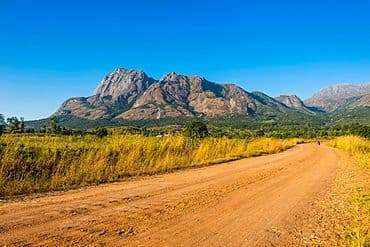
The Terrain of Consequence
Mount Mulanje is a massive granite inselberg, a geological outlier that rises sharply from the surrounding plains. It is a hiker’s paradise, but for the cyclist, it is a test of endurance. The trails leading toward its waterfalls and panoramic views are steep, unpaved, and unforgiving.
You ride Mount Mulanje to feel the weight of your own effort. The paths are narrow, winding through forests and scrubland. The air grows thinner as you ascend. This is where the "rules" of the place become clear: nature does not care about your fitness level. It only cares about your persistence.
The cycling routes around Phalombe are noted for their eco-friendly potential. This means you are moving through a landscape that has not been paved over, not been commodified, and not been made safe. The terrain is suitable for short-distance travel, but "short" is relative. A five-kilometer climb here can feel like fifty if the gradient is steep enough.
Navigating the Town Centre
Phalombe Town Centre is best navigated on foot for short trips, but for the cyclist, it offers a different kind of challenge. The streets are narrow, congested with matolas and motorbike taxis. This is a convergence point where people gamble with chance. You must be aware of your surroundings. The local population uses bicycles for daily navigation, not for sport. They are a tool, not a toy.
If you are cycling through the town, you are part of the traffic. You are not a tourist observing from a distance. You are in the flow. The motorbike taxis zip past, the matolas honk, and the pedestrians weave between vehicles. It is chaotic, but it has a rhythm. Learn it, or you will be swept aside.
The town serves as a base for exploring the surrounding hills. You should not stay for long. It is a place to rest, to repair your bike, and to prepare for the next climb. The local shops sell basic supplies, but do not expect high-end cycling gear. You will need to bring your own tools, your own spare tubes, and your own sense of direction.
Sustenance on the Road
Cycling burns calories. In Phalombe, you will need to replace them. The local food is simple, hearty, and designed for labor. Nsima is the staple, a firm dough-like porridge made from ground white maize flour. It is served with relishes, often Mkhwani, a stew prepared using pumpkin leaves, tomatoes, and ground peanut flour. It is heavy, but it provides the energy you need for the next climb.
For a quicker fix, look for Mandazi, a local fried dough snack made with wheat flour, coconut milk, and spices. It is sweet, oily, and satisfying. Eat it with a cup of Thobwa, a fermented drink prepared from white maize and millet. It is slightly alcoholic, intended to keep you going.
Kachumbari, a fresh salad of onions, tomatoes, and chili peppers, is also common. It is sharp, acidic, and cuts through the heaviness of the nsima. These are not foods for the faint of heart. They are foods for people who work with their hands and their legs. If you are cycling in Phalombe, you are one of those people.
Practicalities and Timing
The best time to visit Phalombe is during the dry season, from April to October. The cooler months, from May to August, are ideal for hiking and cycling. The roads are less muddy, the air is clearer, and the temperatures are more manageable. Outside of this window, the rain can make the trails slippery and the climbs dangerous.
Transport to Phalombe is primarily by matola from Blantyre or Zomba. The journey can be slow, but it is functional. If you are bringing your own bicycle, you will need to secure it on the roof of the matola. Do not expect luxury. Expect to share space with other passengers and their goods. Motorbike taxis are available for local journeys, but they are not suitable for carrying bicycles.
There is no railway line serving Phalombe. The main Malawi Railways line runs along the lake or to the border via Limbe and Nsanje, but it does not pass through Phalombe. You are on your own here.
When to Go and Who It’s For
Mother’s Day in Malawi falls on the second Sunday of May. In 2026, this observance is on May 10. It is a quiet time, but it may affect local shop hours. Christmas Day (2026-12-25), Boxing Day (2026-12-26), and the observed holiday (2026-12-28) fall in the rainy season, making cycling more difficult. New Year’s Day (2027-01-01) and John Chilembwe Day (2027-01-15) are also in the wet season.
Phalombe is not for everyone. It is for those who seek solitude, who are willing to work for their views, and who understand that travel is not about comfort. It is for solo travelers, for slow travelers, and for those who want to feel the weight of the world on their shoulders. Families may find the terrain too challenging, but those with experienced cyclists may find it rewarding.
Stay for two or three days. One day is not enough to acclimate to the altitude. A week is too long for a town of this size. Two or three days is enough to climb, to rest, and to leave with a clearer sense of who you are.
FAQ
Is Phalombe safe for cyclists? Yes, but caution is required. The roads are narrow and traffic can be unpredictable. Ride defensively, wear a helmet, and avoid riding at night.
Can I rent a bicycle in Phalombe? Bicycles are common in Phalombe, but rental options for tourists may be limited. It is advisable to bring your own bike or arrange a rental in advance through your accommodation.
What is the best route for a first-time cyclist? Start with the shorter routes around the town centre before attempting the climbs toward Mount Mulanje. The terrain is steep, and acclimatization is essential.