Bassar, Togo: Yams, a Palace, and the Roads That Lead There
Northern Togo's yam capital rewards travelers who expect few tourists, a royal palace, and the best fufu of their life. Here's what's actually worth the road.
A
By Alan Jackson
August 31, 2026 · 6 min read
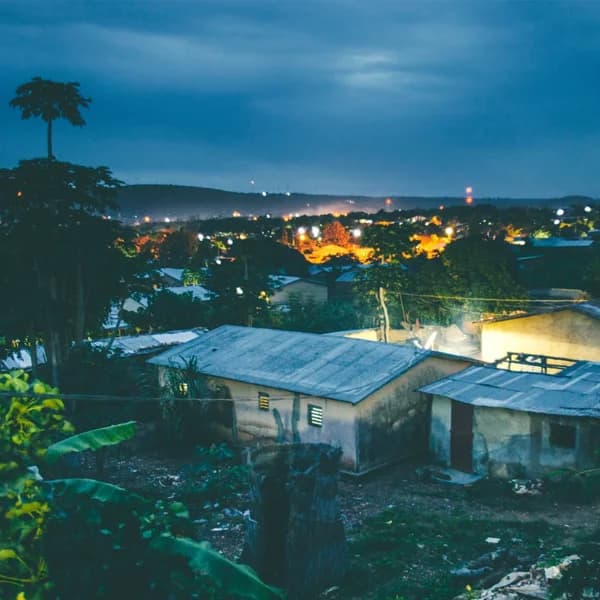
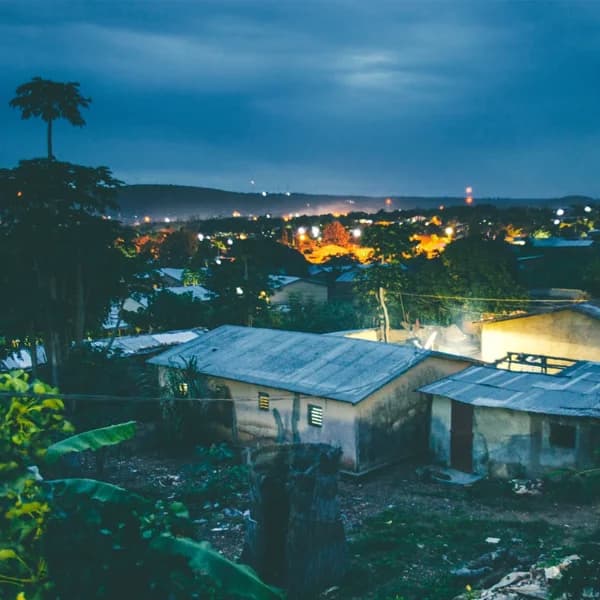
Twilight elevated view of Bassar town with corrugated-roof buildings, scattered lights, distant hills, and a tall palm tree silhouetted against a blue sky · Source: assets.tourhub.co
Northern Togo's yam capital rewards travelers who expect few tourists, a royal palace, and the best fufu of their life. Here's what's actually worth the road.
The yam market in Bassar opens before the sun gets high, and by mid-morning the air smells like wet earth and something you can't quite name. This is the "yam capital of Togo," as the town's own reputation insists, and if you stand still at the edge of the stalls long enough, a vendor will tell you exactly which tuber is fresh and which one is lying to you. That education, honestly, is the whole trip.
Bassar is the capital of Préfecture de Bassar in northern Togo's Kara Region, which means it sits far enough from Lomé that most guidebooks never bother. That's the point. The town moves at the speed of a harvest calendar, not a tourist itinerary, and the people who make the detour usually come back talking about the food and the silence rather than any monument.
Twilight elevated view of Bassar town with corrugated-roof buildings, scattered lights, distant hills, and a tall palm tree silhouetted against a blue sky · Source: assets.tourhub.co
A Palace Without the Pageantry
The Bassar Royal Palace, known locally as Le Palais Royal, is the seat of the King of Bassar, with a lineage passed down through generations. Unlike palaces built for spectacle, this one reads as continuity rather than grandeur — a working institution more than a photo op. You won't find a ticket booth or a guided loop. What you'll find is a sense that the town's identity still orbits a single family, which is rarer than you'd expect in a country this size.
The palace grounds are best approached as a courtesy visit rather than a sightseeing stop. Dress modestly, ask before pointing a camera, and let the curiosity lead the conversation instead of the checklist. Bassar doesn't perform its heritage for visitors; it simply keeps it, which is arguably more impressive.
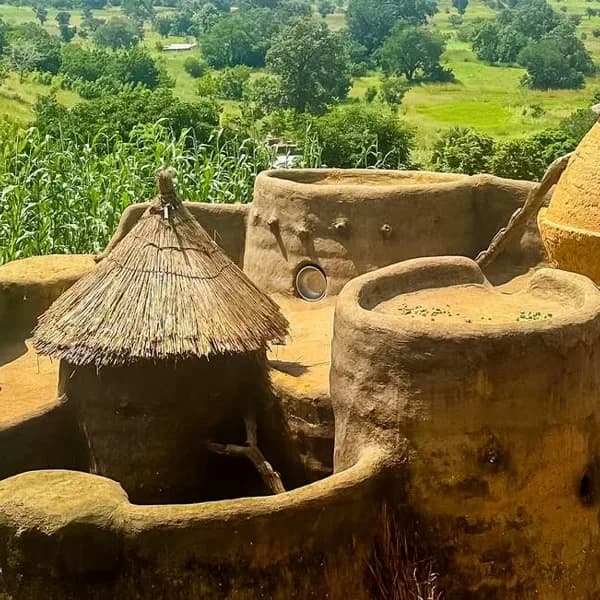
Traditional earthen architecture with rounded mud structures and a thatched conical roof against a green rural hillside near Bassar · Source: assets.tourhub.co
The Yam Fields and the Market
A few kilometers outside the town center, the yam fields stretch out in a way that makes the "yam capital" label feel almost too modest. These are the agricultural lands where the yam — the crop Bassar is best known for producing — does most of its growing. The harvest is central to local cuisine and cultural identity, and it drives the rhythm of the whole region.
Down in the yam market, the tubers pile up freshly harvested, some still carrying the red dust of the fields. The yam isn't just a vegetable here; it's a credential. Visit during the traditional Yam Festival, if your timing holds, and the whole town seems to pause for a celebration that predates any travel blog.
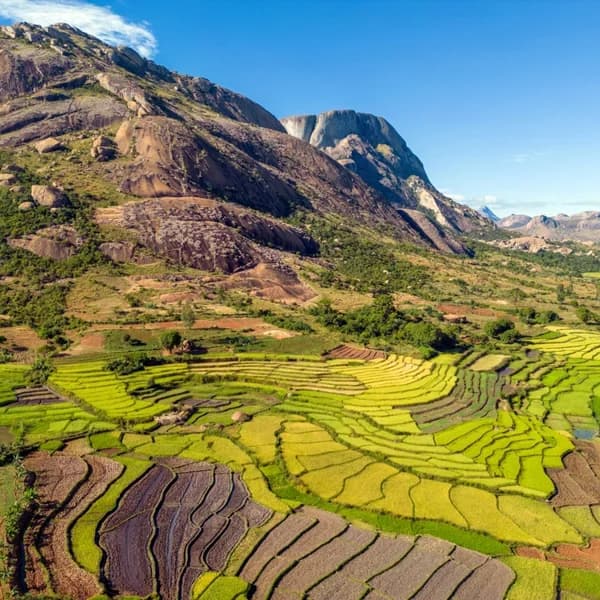
Elevated landscape of the Bassar region showing terraced paddies in green and brown hues with large rocky hills and boulders under a clear blue sky · Source: assets.tourhub.co
Eating Like the Locals
You can't talk about Bassar without talking about fufu, the staple Togolese dish made from crushed cassava or plantain. The local yam is the preferred type for making it, which means a bowl of fufu in Bassar is about as authentic as it gets — the yam is local, the dish is local, and the combination is basically the town's answer to its own fame.
For a sit-down version, Chez Tante Restaurant is a noted local eatery serving traditional Togolese cuisine, including fufu. It's worth treating that name as indicative rather than gospel, since the source is non-authoritative, but it's one of the few concrete options in a town where most meals happen in house yards and market stalls. Either way, eat with your hands if someone shows you how. It changes the meal.
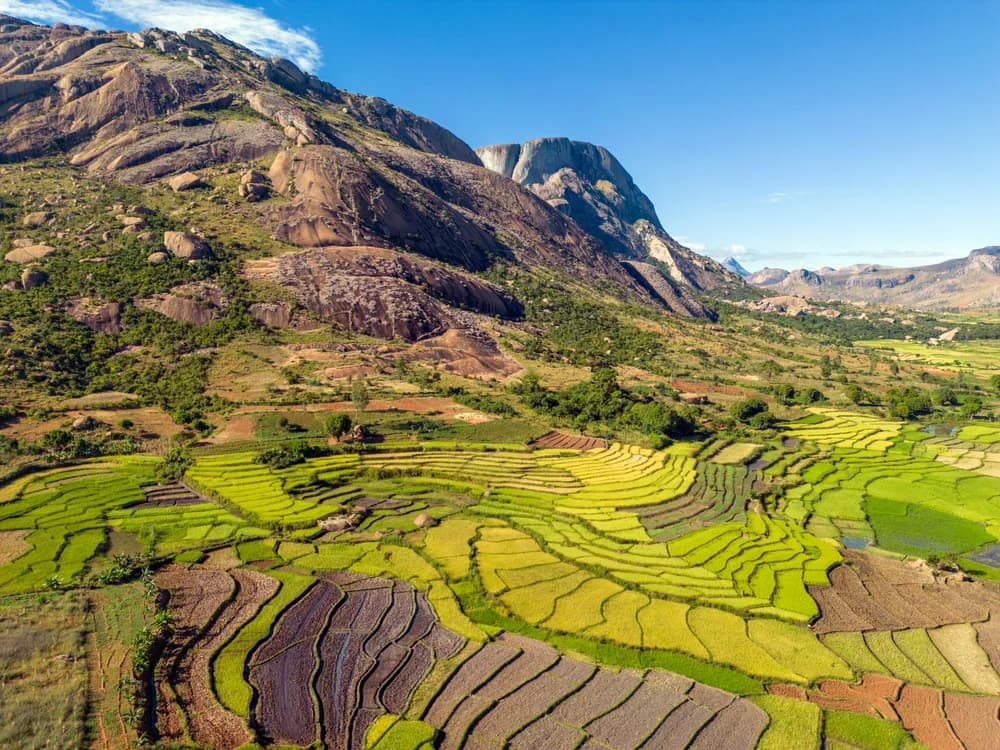
Elevated landscape of the Bassar region showing terraced green and yellow paddies at the foot of large rocky hills under a clear blue sky · Source: assets.tourhub.co
Getting There and Getting Around
Bassar sits in northern Togo's Kara Region, reached by road from Lomé. There is no confirmed active passenger rail service here — the only documented rail line in Togo is the short Lomé–Anoho route, which never came this far north. So the journey is by road, and the exact fare and journey time aren't documented anywhere authoritative. Expect a long drive through changing landscape: the coastal humidity thinning out into dry northern air as you climb inland.
Once in town, you don't need a plan. Bassar is walkable at the scale of a real African provincial capital — enough traffic, enough pavement gaps, enough pedestrians to keep you alert. Renting a car or hiring a driver for day trips to the yam fields is the sensible move if the heat or the distance bothers you, but the town itself doesn't demand one.
Twilight elevated view of Bassar town with corrugated-roof houses, scattered streetlights, distant hills, and a tall palm tree against a blue evening sky · Source: assets.tourhub.co
When to Go and Who It's For
Bassar sits in northern Togo, where the dry season — roughly November through March — is the practical visiting window. The rainy months turn unpaved roads to paste and make the yam fields a green, muddy blur worth avoiding unless you like dust that never settles. Summer, when much of the world's travel calendar points north for the heat, is precisely when Bassar goes quiet and green, which suits a certain kind of traveler perfectly.
There are no major recorded holidays in the near term to plan around, which works in your favor: no sudden festival crowds, no price spikes, no reason to book weeks ahead. Bassar is a slow-travel, solo, or curious-pair destination. It isn't ideal for families wanting resorts or nightlife. Stay two or three days to let the town reveal itself, then carry that patience toward the next place.
Practical Notes
Bring small-denomination Togolese francs; card machines are a fantasy this far north. Sunscreen and a hat beat any itinerary in the dry season. Learn a few words of local greeting — a simple "bonjour" goes further than any translation app. And respect the courtesy of the royal palace: ask, don't assume, and treat the whole town as a host rather than a backdrop.
Frequently Asked Questions
Is Bassar safe to visit?
Northern Togo generally asks for the usual precautions — register with your embassy, check current travel advice, and move with a trusted driver on longer roads. Bassar itself is a quiet provincial town.
How do I get there from Lomé?
By road. There's no rail service to Bassar, so plan on a long drive through the Kara Region. Confirm current road conditions locally, as conditions shift with the seasons.
What should I eat?
Fufu made with the local yam, ideally somewhere like Chez Tante Restaurant, plus whatever the yam market is selling fresh. The yam is the reason you're here.
0 Comments
Bassar, Togo: Yams, a Palace, and the Roads That Lead There · TourGarage