Skip the curated noise. Præstø offers raw, local art in a town that refuses to perform for tourists.
You don’t come to Præstø for the Instagram feed. You come here because the algorithm hasn’t reached this corner of Zealand yet. The town sits on the coast of South Zealand, a place where the wind cuts through your jacket and the silence is loud enough to hear your own thoughts. There are no glossy brochure moments here. No golden hour filters. Just the gray Baltic, the smell of damp wood, and a stubborn refusal to be anything other than what it is.
If you are looking for a polished museum experience, turn back. This isn’t Copenhagen. This isn’t even Vordingborg. This is Præstø. A town of roughly 2,000 people who have decided that art isn’t something you buy; it’s something you survive. The galleries here are rooms. They are windows. They are cracks in the facade where the real world leaks in.
The Gallery as a Mirror
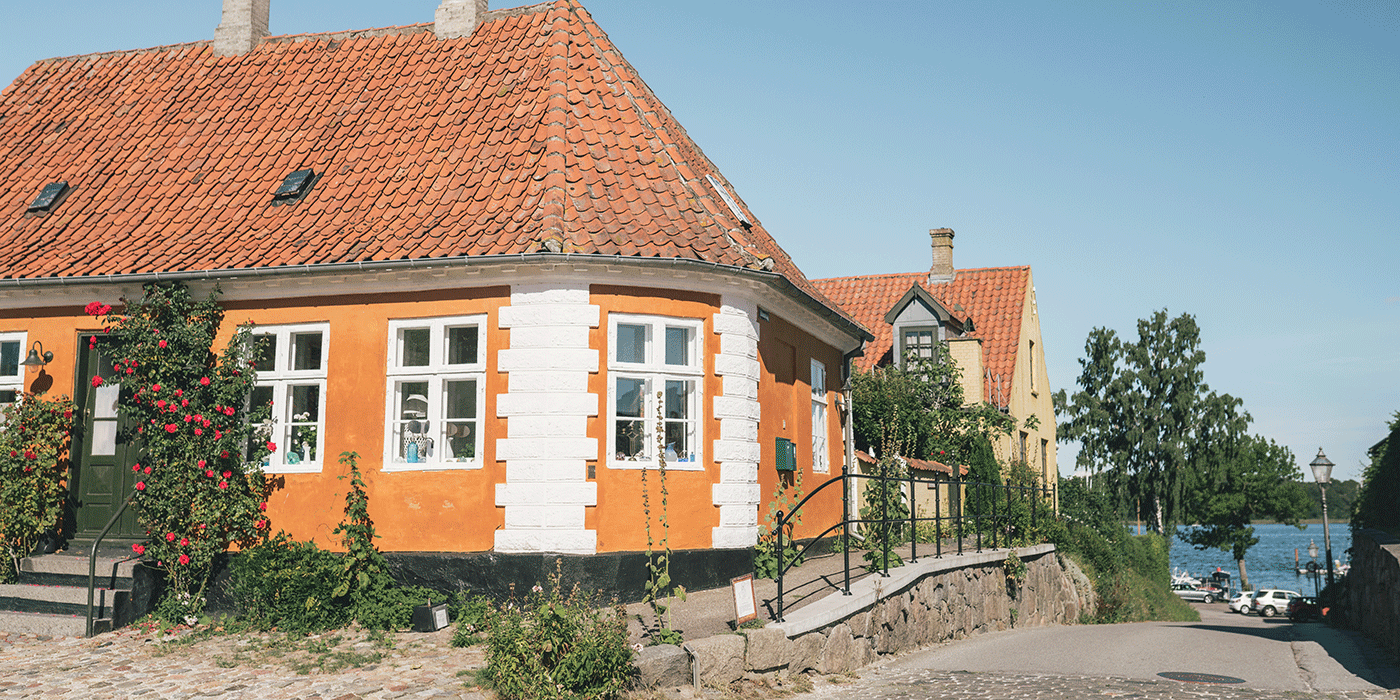
There are no famous names on the signs. No "Museum of Modern Art" or "Contemporary Space." If you look at the local directories, you’ll find a list titled "Top 10 Kunst og Gallerier" on sites like vores-praesto.dk. But scroll past the thumbnails. Look at the addresses. They are tucked into residential streets. They are basements. They are converted workshops.
The art in Præstø is defensive. It doesn’t ask for your admiration. It asks for your attention. You walk into a space that smells of turpentine and old coffee. The walls are white, but not the sterile white of a corporate lobby. It’s the white of peeling paint. The artists here are locals. They paint the sea because they live next to it. They carve wood because they have nothing else to do.
You will see landscapes that look like bruises. You will see portraits that look like accusations. This is documentation. The artist isn’t trying to sell you a vision of beauty. They are trying to show you what it feels like to watch the tide come in for forty years straight.
Don’t expect guided tours. Don’t expect plaques explaining the meaning. The meaning is in the texture. The roughness of the canvas. The way the light hits the dust motes in the air. If you want explanation, read a book. If you want feeling, stand still.
The Coastal Context
Præstø is defined by its geography. It is a port town, though the port is small, functional, and unromantic. The water is cold. The sky is wide. The light is flat. This environment shapes the art. You cannot paint bright, tropical colors when the sky is the color of wet concrete. The palette here is muted. Grays. Blues. Whites. The occasional red of a warning buoy.
The wind is a character in every piece. You can feel it in the brushstrokes. The artists are fighting the elements, or surrendering to them. There is no middle ground. This is why the art feels honest. It is a response to reality, not an escape from it.
Walk to the harbor. Look at the boats. They are working vessels. Rusty. Practical. Now look at the art in the galleries. It is the same. No pretense. No luxury. Just survival. The connection is obvious if you stop looking for it. The town and the art are the same thing. A struggle against the void.
Getting There
Getting to Præstø is part of the filter. The journey requires effort. You take a train to Nykøbing Falster or Vordingborg. Then you transfer. Maybe a bus. Maybe a taxi. The connections are thin. The schedules are sparse. This is good. It keeps the crowds away.
The DSB trains are efficient, but they don’t go everywhere. You have to plan. You have to check the timetables on rejseplanen.dk. You have to accept that you might wait. Waiting is part of the journey. It gives you time to think about why you are here. Are you running from something? Or are you looking for something?
Once you arrive, you walk. The town is small. You can see the whole thing in an hour. But you shouldn’t rush. The streets are narrow. The buildings are old. The cobblestones are uneven. Trip if you want. It will ground you. The center of town is quiet. The shops are closed on Sundays. The cafes are empty. This is not a flaw. It is a feature. You are alone with the art.
What to See
Since there are no confirmed "must-see" galleries, you have to explore. This is the point. You walk into any door that looks like it might lead somewhere. You knock. You ask. The locals are not hostile. They are curious. Why are you here? What do you want?
Look for the small signs. "Udstilling." "Galleri." "Kunst." These are the words that matter. The spaces are small. The collections are rotating. One week it’s paintings. The next it’s photography. The next it’s sculpture. The quality varies. Some pieces are amateur. Some are masterful. You have to judge for yourself.
Do not let the lack of fame distract you. The best art is often the most ignored. The artist who has never sold a piece may have more to say than the one with a gallery in Copenhagen. The pressure to perform is gone. The ego is stripped away. What remains is the work.
Visit the local history section mentioned in search results. It is a collection of memories. Photos. Objects. Stories. This is the context for the art. The history of the town is the history of the people who make the art. They are the same people. They remember the storms. They remember the peace. They paint it all.
Practical Details
Money is not the issue here. The prices are low. The entry is often free. The coffee is cheap. The food is simple. You eat at a local cafe. You drink a beer from a bottle. You sit on a bench. You watch the people.
The weather is unpredictable. Bring layers. Bring rain gear. The wind is constant. The sun is rare. But when it comes out, it is brilliant. The contrast is sharp. The shadows are deep. The light is a gift.
Timing is everything. Go in the afternoon. The light is softer. The town is quieter. The galleries are open. The artists are working. You can talk to them. Ask them about their process. Ask them about their life. They will tell you the truth. It is not always pretty. It is always real.
Stay for a day. Or a week. It doesn’t matter. The town doesn’t change. The art doesn’t change. You change. That is the goal. To leave Præstø with a different perspective. To see the world without the filter. To accept the grime. To find the beauty in the broken.
FAQ
Do I need a visa? No. Præstø is in Denmark, part of the Schengen Area. If you are from the EU, US, UK, or most other countries, you can enter with a valid passport. Check your specific visa requirements before traveling.
Is Præstø safe? Yes. It is a small town. Crime is low. The biggest risk is slipping on wet cobblestones. Watch your step.
What is the best way to see the art? Walk. Don’t rely on a list. Don’t rely on a guide. Let the town show you what it wants to show you. The best discoveries are accidental.