Sleep near Plaza Independencia or by the rail lines. Ignore the polished lobby. Find the grit, the noise, and the truth of the Argentine north.
You don’t come to San Miguel de Tucumán for the view. You come here because the rest of the world feels like a curated feed, and you want to know what happens when the algorithm dies. The air is thick, not with humidity, but with history that hasn’t been polished for tourists. It smells of dust, old brick, and the faint, metallic tang of the railway tracks that cut through the city like scars. This is the capital of the north, the place where Argentina declared it didn’t need to be part of anything else. If you’re looking for a spa and a silent room, book a flight to somewhere that sells peace. If you want to feel the ground shake under the weight of a nation’s ego, you stay here. You stay in the center. You stay close enough to hear the trains rattle the windows.
The Heart: Plaza Independencia
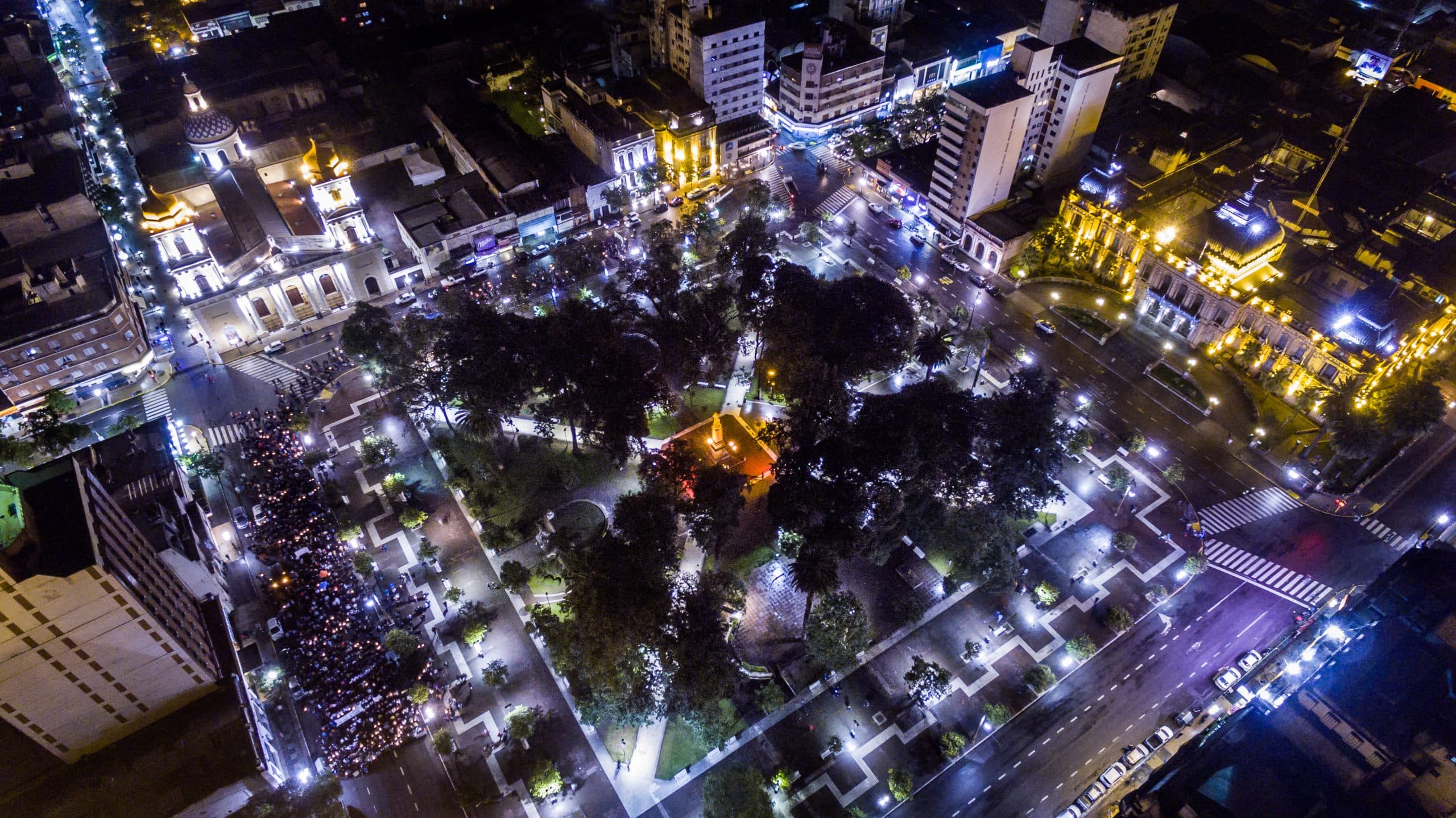
The city orbits one point: Plaza Independencia. This square is a stage. Located between 25 de Mayo, San Martín, Laprida, and 24 de Septiembre streets, this square is the gravitational center of San Miguel de Tucumán. If you book a hotel here, you are booking proximity to the pulse. The streets radiating from this square are where the city’s identity is performed daily.
Staying in the immediate vicinity of the Plaza means you are walking distance from the Casa de la Independencia, the historic house where the Declaration was signed. It is a small building, unassuming, but it holds the moment the country decided to exist. You don’t stay here for the luxury; you stay here because the walls are thin enough to let the city in. At night, the square lights up, and the crowd shifts from office workers to locals who know that this is their space, not a backdrop for your Instagram. The noise is part of the package. The echo of footsteps on the pavement is the soundtrack. If you need silence, you are in the wrong country.
The Edge: Estación Tucumán Mitre
Move away from the square, and you hit the tracks. The San Miguel de Tucumán Railway Station, known as Estación Tucumán Mitre, is the city’s arterial wound. This is where the Ferrocarril General Mitre line terminates, operated by Trenes Argentinos for passengers and Nuevo Central Argentino for freight. The station is a monument to industrial function, not aesthetic pleasure.
For the traveler who rejects the sanitized hotel experience, staying near the station is a deliberate choice. It places you in the flow of transit, where the long-distance trains to Buenos Aires begin their 32-hour crawl south. The area around the station is raw. It is where the city meets the rest of the continent. You will hear the horns. You will see the workers. You will feel the vibration of the rails in your chest. This location demands a tolerance for noise. It is a place for those who want to feel connected to the movement of the country. The buildings here are older, heavier, and less concerned with your comfort. They are concerned with endurance.
The Districts: Between the Square and the Tracks
San Miguel de Tucumán does not have "neighborhoods" in the way European cities do. It has zones of intensity. The area between Plaza Independencia and the railway station is where the action happens. This is the grid. It is dense, it is chaotic, and it is alive. When you look for accommodation, you are looking for a window that opens onto this grid.
Avoid the outskirts. The further you drift from the center, the more the city dissolves into generic suburbia. You want the friction. You want the street vendors, the crowded corners, the sudden bursts of conversation in Spanish that you might not fully understand but can certainly feel. The hotels here are functional. They offer a bed, a lock, and a view of the city’s unvarnished reality. This is the anti-vacation. It is the space where you stop performing and start existing. The streets are lined with colonial-era facades that have seen better days, and that is exactly why they are valuable. They are honest.
Practical Realities
Money in Argentina is a lesson in humility. Prices change faster than the weather. A train ticket to Buenos Aires might start around 11,000 ARS on booking sites, but do not trust static numbers. The economy is fluid. Bring cash. Understand that the price you see online is a suggestion, not a guarantee. When you book your stay, look for places that accept local currency without a hidden surcharge.
Timing is everything. The weather in October shows increasing cloud cover but mild temperatures, suggesting that spring (September-November) and autumn (March-May) are the windows where the heat is manageable. Summer is brutal. The sun does not forgive. If you stay in the summer, you are staying in an oven. The air is heavy, the light is harsh, and the city slows down during the midday heat. You emerge at dusk. You drink. You talk. You survive.
Do not expect English to save you. This is not a tourist trap designed for your convenience. Learn the basics. Ask for directions. Accept that you will get lost. Getting lost in the grid between the Plaza and the station serves as the point. You are not a consumer here. You are a guest in a city that has survived revolutions, economic collapses, and its own contradictions. Treat it with respect.
When to Go and Who It’s For
The calendar is crowded with commemorations that matter to the locals. June 20 marks the death of General Manuel Belgrano. June 17 marks the death of General Martín Miguel de Güemes. These are not just dates; they are days when the city stops to remember itself. Expect higher demand, surge pricing, and crowding. Book early if you are arriving now. Independence Day is July 9. These are days when the streets fill with parades, speeches, and a sense of collective identity that is palpable.
If you are a solo traveler seeking connection, this is your place. If you are a family looking for a safe, sterile environment, look elsewhere. This is for the slow traveler who has time to sit in a square and watch the world go by. Stay for three days. Four if you can handle the heat. You do not need more. The city is small enough to know in a week, and complex enough to never fully understand. You come to San Miguel de Tucumán to shed the layers of comfort you brought with you. You stay in the center. You listen to the trains. You wake up.