A low-impact audit of Central Finland’s quietest corner: rail access, seasonal rhythms, and the discipline of slow travel in a 1,400-person municipality.
The Metric of Quiet
Multia, Finland, is a municipality in the Central Finland region with a population of approximately 1,430 residents spread across 765.63 square kilometers. That ratio—roughly two people per square kilometer—is the primary metric for sustainable tourism here. The environmental load is negligible. The infrastructure is minimal. The experience is defined by the absence of excess.
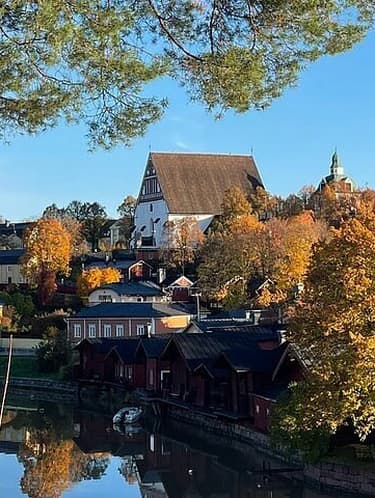
The town center is small enough to traverse on foot in under ten minutes. There are no traffic lights. There is no commercial noise. The landscape is dominated by local lakes and dense forests, which serve as the primary assets for seasonal outdoor activity. In autumn, the focus shifts to berry picking; in winter, to cross-country skiing. The infrastructure supports these activities without requiring high-energy consumption. This is sustainable tourism in its purest, most unglamorous form: a place where the visitor’s footprint is limited by geography, not by regulation.
Transit and Access
Getting to Multia requires a deliberate choice. There is no direct high-speed rail line to the municipality itself. The nearest major hub is Jyväskylä, the regional capital. The quickest connection from Jyväskylä to Multia takes approximately 46 minutes. The cost is minimal, typically around $15 for the cheapest option, which usually involves a combination of bus and train.
For those preferring rail, the journey often involves a connection through Keuruu. The train from Keuruu to Jyväskylä is a standard regional service, taking roughly 50 to 54 minutes. Fares are low, ranging from €5 to €8 depending on the operator and booking time. VR, the national rail company, offers services in this corridor. Alternatively, railbus services from Haapamäki connect the region to Seinäjoki and Tampere. The key to sustainable transit here is accepting the transfer. Driving a car to a place with a population of 1,430 is a logistical inefficiency. The train and bus network, while sparse, is sufficient and low-carbon.
Where to Stay
Accommodation in Multia is limited. You will not find hotel chains or boutique resorts. The options are primarily local guesthouses, small agritourism properties, or self-catering rentals. Specific named hotels are not confirmed in current reliable data, so the strategy is district-based rather than property-based.
- The Municipal Center: This is the most accessible area for visitors. It is within walking distance of the local services and the main road. Stays here are typically basic, functional, and affordable. Expect a nightly rate in the range of €80–€120 for a private room in a guesthouse.
- Lakeside Rentals: The local lakes offer the primary scenic value. Rentals near these water bodies are more expensive, often €150–€200 per night, but they provide the direct access to nature that justifies the trip. These are often family-run or privately owned cottages.
- Kuivaniemi Locality: A specific locality within Multia, near Matopelto and Lukkarinvuori, offers a more remote experience. Private rentals may be available in this geographic area. It is quieter, harder to reach, and requires a higher degree of self-sufficiency.
The standard for lodging here is functionality. The beds are clean. The heating works. The view is natural. Do not expect symmetry or status. Expect silence.
The Autumn Window
Autumn is the most efficient season for visiting Multia. The summer tourist peak has passed. The winter darkness has not yet arrived. The forest floor is active with berry picking, a low-impact activity that requires no infrastructure beyond a basket and a knife. The light is lower, casting long shadows across the lake surfaces. The air is cooler, making outdoor activity more comfortable than in the humid summer months.
The local rhythm is dictated by the harvest. The community is focused on preserving food for the winter. This is a period of quiet productivity. Visitors can participate in this rhythm by foraging or simply walking the forest trails. Food is not a primary draw; meals are typically simple, home-prepared, or sourced from the nearest town in Jyväskylä. The culinary experience focuses on sustenance rather than novelty.
Practical Logistics
- Currency: Euro (EUR). Cash is still useful in small municipalities, though card acceptance is increasing.
- Connectivity: Mobile data coverage may be inconsistent in the forested areas. Do not rely on real-time navigation in the deep woods.
- Language: Finnish. English is spoken in Jyväskylä and by most service providers in Multia, but do not expect fluency in every rural setting.
- Booking: Accommodation is scarce. If you plan to visit during a holiday period, book well in advance. The market is small; a single full guesthouse can mean a lack of options for the entire municipality.
The next major holiday is All Saints’ Day on October 31, 2026. This date is only three weeks away. Expect higher demand for the limited lodging inventory. Prices may surge. Crowding will be minimal, but availability will be tight. If you are planning a trip in late October, secure your accommodation now.
Who This Is For
Multia suits the traveler seeking precision. It is for the solo walker, the photographer who values negative space, and the auditor of efficiency. It is not for families requiring entertainment infrastructure or for groups requiring large meeting spaces.
The ideal stay is 2–3 days. One day to arrive and orient. One day to walk the forest or sit by the lake. One day to depart. The value is in the subtraction. You leave with a clearer sense of scale, a lower carbon footprint, and a memory of a place that does not require your attention to exist. It is a place that functions without you. That is the standard.