The east coast of Barbados does not offer peaks; it offers a ridge line of coral limestone and a silence that feels like a verdict.
The road from Speightstown to Bathsheba is not a journey of scenery so much as a test of endurance. The asphalt cracks under the weight of the sun, and the wind coming off the Atlantic does not caress; it pushes. In Greenlands, a village of roughly 600 souls in the parish of Saint Andrew, the concept of a "mountain retreat" is stripped of its alpine pretensions. There are no snow-capped summits here. There are only the verdant hills that rise abruptly from the rocky shore, and the sugarcane fields that stretch out like a held breath.
You do not come to Greenlands to escape the world. You come to see how the world holds its shape when the noise is removed. The retreats here, often centered on yoga and meditation, function as holding spaces. They are places where the outcome of your stay is not guaranteed by a concierge, but by your own ability to sit with the silence.
The Landscape of Constraint
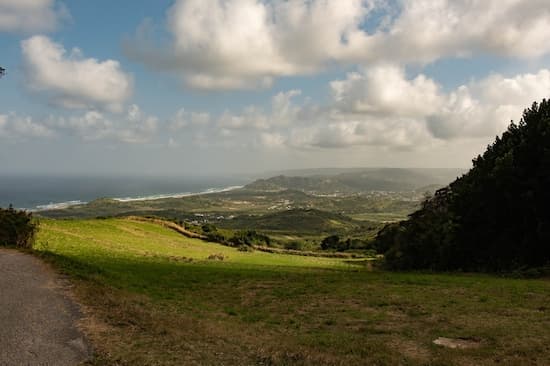
Geography is a rule, not a suggestion. Greenlands sits on the rugged east coast, sandwiched between the more famous endpoints of Speightstown and Bathsheba. To the east, the Atlantic Ocean throws itself against cliffs that have stood for millennia. To the west, the interior hills rise, dense with vegetation. This is not a flat island. The terrain demands attention.
When you walk the paths here, you are walking on the edge of the island’s spine. The air is thick with salt and the scent of crushed cane. The light is harsh, unfiltered by the haze that often softens the west coast. This clarity is a feature, not a bug. It forces you to see things as they are. The cliffs near Bathsheba, visible from the higher points of Greenlands, serve as reminders of the island’s geological history, a stark boundary between land and sea.
The hills surrounding the village are not high enough to be called mountains in the traditional sense, but they are high enough to change the air. The wind is stronger here. The temperature drops slightly in the shade of the hills. It is a microclimate of isolation. For a retreat seeker, this isolation is the product. You are not paying for a view; you are paying for the distance from the rest of the island’s pulse.
Where to Stay
Accommodation in Greenlands is sparse. The village is small, and the infrastructure is built for residents, not tourists. There are no five-star hotels with pools and spas. There are private homes, guesthouses, and retreat centers that operate with a degree of self-sufficiency.
If you are looking for a yoga or meditation retreat, you will find options listed on regional booking platforms, but the specifics vary. Some are simple bungalows set back from the road, surrounded by cane fields. Others are integrated into larger properties that offer structured programs. The price bands are not fixed. A night in a basic guesthouse might cost around BBD 100–150, while a structured retreat program can run several hundred dollars per night, including meals and instruction.
The differentiator is the proximity to the quiet. Look for properties that are set back from the main road. The noise of the traffic is a constant hum on the east coast route. A retreat that offers a buffer of vegetation or elevation will provide the silence you are seeking. Do not expect room service. Expect to prepare for your own comfort. The staff are there to facilitate your practice, not to serve your whims.
The Practice of Stillness
Yoga and meditation in Greenlands are not performative. The classes are often held in open-air spaces or simple halls that allow the wind to move through them. The instructors are practitioners who understand the local environment. They know how the humidity affects the body. They know how the light changes in the afternoon.
The practice here is grounded. You are not floating in a void; you are anchored by the rock beneath you. The sessions often begin with a period of silence, allowing the mind to adjust to the rhythm of the island. The breathing exercises are adapted to the heat. The poses are modified for the uneven ground. This is not a retreat for those who want to replicate their home practice in a new location. It is a retreat for those who are willing to let the place change the practice.
The meals are simple. Fresh fruit, local vegetables, and fish. The food is not a spectacle. It is fuel. It is meant to sustain you through the hours of sitting and moving. The lack of culinary distraction is intentional. You are here to focus on your mind, not your palate.
Practicalities of the Edge
Getting to Greenlands requires planning. There is no railway in Barbados. The island is served by a bus system, but the routes are not frequent, and the stops are not always convenient for retreat centers. Most visitors rent a car. The drive from Bridgetown to Greenlands takes about an hour, depending on traffic. The road is narrow and winding. Drive slowly. The curves are sharp, and the drop-offs are steep.
Money is not a barrier, but it is a reality. Barbados uses the Barbadian dollar (BBD), which is pegged to the US dollar. Prices are higher than in mainland Caribbean countries. Bring enough cash for small purchases. ATMs are available in Speightstown and Bathsheba, but not in Greenlands itself.
Timing is critical. The dry season, from December to May, is the best time to visit. The rain is less frequent, and the wind is more predictable. In the summer, the heat and humidity can be oppressive. The retreats may still operate, but the comfort level drops. Book ahead. The accommodation options are limited, and the retreat centers fill up quickly, especially during the holiday periods.
When to Go and Who It Is For
The next major holiday in Barbados is Emancipation Day, on August 1, 2026. This is followed by Kadooment Day on August 3. These are public holidays, and the island will be crowded. Traffic will be heavy. Prices will be higher. If you are seeking solitude, avoid these dates. Independence Day, on November 30, is another peak period.
The best time to go is during the shoulder seasons, just before or after the dry season. The weather is still good, but the crowds are thinner. The retreat centers are more likely to have availability.
This place is not for everyone. It is not for those who want constant entertainment. It is not for those who need a full bar and a pool party. It is for those who are willing to sit with themselves. It is for solo travelers, couples seeking connection, and small groups looking for a shared experience. It is for those who understand that silence is not empty. It is full of answers, if you are willing to listen.
Stay for at least five days. Three days is not enough to adjust to the rhythm. Seven days is ideal. You need time to let the noise fade. You need time to feel the weight of the rock. You need time to see what is left when the distractions are gone.
FAQ
Is Greenlands safe for solo travelers? Yes. It is a small, quiet village. The crime rate is low. However, common sense applies. Do not leave valuables in your car. Be aware of your surroundings, especially at night.
Do I need a visa for Barbados? Citizens of many countries, including the US, UK, and EU, do not need a visa for stays up to six months. Check with your local embassy for specific requirements.
Is there internet access in Greenlands? Wi-Fi is available at most retreat centers and guesthouses, but the connection can be slow. Do not rely on it for heavy data usage. Consider it a bonus, not a guarantee.