Skip the resort. Sleep in the station’s shadow. Bereket, Turkmenistan, is where the rails cross and the desert waits.
The air in Bereket tastes like dust and diesel. It is a flavor you do not find on a menu. It is the taste of a place that exists because trains demand it. You are standing in Balkan Province, western Turkmenistan, surrounded by the Karakum Desert. The Kopetdag Mountains lie far to the south, a distant memory of elevation in a landscape defined by flat, unyielding sand. There are no beaches here. No infinity pools. Just a railway station that serves as a critical node, a crossroads of iron and ambition, and a silence so heavy it feels like a judgment on your need for entertainment.
Most travelers treat Turkmenistan as a monolith of white marble and strict control. They go to Ashgabat to see the statues. They go to the capital to perform compliance. But Bereket is different. It is an administrative center that refuses to be a tourist trap. It is a functional node on the Trans-Caspian Railway, a city that breathes only when the engines roar. If you are here to be pampered, turn around. The hotels will sanitize your experience until you forget why you left home. If you are here to see the machinery of a closed society, to watch the world move through a gate that rarely opens, then you are in the right place.
The Station: A Cathedral of Transit
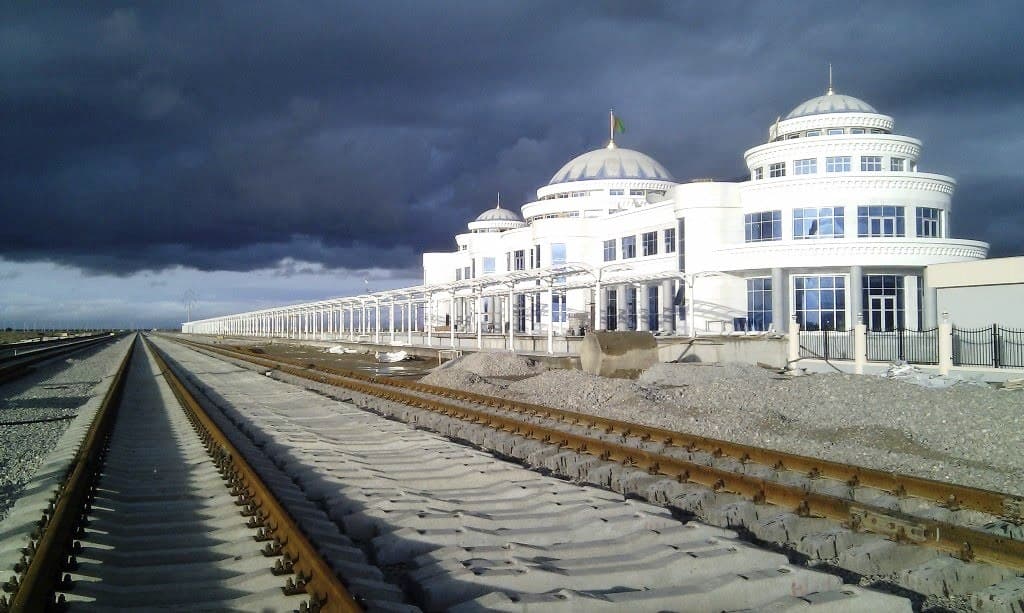
The Bereket Railway Station is the city’s heart. It stands as a relic of Soviet-era infrastructure, a blend of architecture that has survived border shifts and the slow creep of desert sand. Operated by Türkmendemirýollary, the national railway, it serves as a critical crossroad. To the west, the Trans-Caspian Railway links the Caspian Sea ports to the interior, stitching together Turkmenistan, Uzbekistan, and Kazakhstan. To the north and south, the North-South Transnational Railway Corridor connects Russia to the Persian Gulf, passing through Kazakhstan, Turkmenistan, and Iran.
This is logistics as landscape. The station is a place of waiting. You sit on benches that have felt the weight of thousands of travelers, watching the tracks stretch into the horizon. The architecture is grand in its functionality, a reminder that this city was built for movement, not contemplation. In the summer heat, the steel rails shimmer, distorting the view of the approaching trains. There is no luxury here, only the raw efficiency of a system that moves goods and people with indifferent precision. You are a passenger in a machine that does not care about your comfort. That is the point.
The Oasis: Green in a Sea of Sand
Bereket is an oasis. It sits in the heart of the Karakum Desert, a rare patch of green hundreds of kilometers from the Kopetdag Mountains. The contrast is stark. One moment you are looking at the station’s stone facade, the next you are staring at the endless expanse of sand that defines the Turkmen landscape. The mountains provide no immediate backdrop; they are a distant myth in this flat expanse. The desert is a presence. It presses in on the city, a reminder of the fragility of human settlement in this region.
Walking through the town, you notice the dust. It coats everything, from the car windows to the leaves of the few trees that survive the heat. The oasis setting is a survival strategy. The water that sustains the city is a precious resource, managed with the same strict control that governs the rest of Turkmenistan. There are no manicured gardens here, only the hardy vegetation that thrives in arid conditions. The heat in June is intense, a dry, baking warmth that strips away pretense. You sweat. You feel the weight of the sun. It is a physical experience, not a visual one.
The Market: Commerce in the Shadows
The local markets in Bereket are where the city’s life pulses. There are no named restaurants to guide you, no Michelin stars to validate your choices. Instead, you find stalls selling traditional Turkmen crafts and modern goods. The items are a mix of the old and the new, a reflection of a society caught between tradition and globalization. You see wool rugs, intricate in their patterns, alongside plastic trinkets and imported electronics. The vendors do not speak English, and they have no interest in performing hospitality for your camera. They are selling goods, not experiences.
Food is a mystery here. No specific dishes are documented as unique to Bereket. You will eat what is available: bread, tea, perhaps some meat. The meals are functional, meant to fuel you for the journey, not to delight your palate. The lack of culinary fame is a feature, not a bug. It forces you to engage with the local reality, to accept the food as it is, without the filter of guidebook recommendations. The market is a place of observation, not consumption. You watch the transactions, the bartering, the quiet exchanges of currency and goods. It is a glimpse into the daily life of a people who live on the margins of the global tourist economy.
The Cost of Entry: Why It Hurts
Bereket is expensive. The limited tourism infrastructure, high import duties, and government restrictions drive up the cost of everything. You pay for the privilege of being there. The prices are fixed, and the options are few. Budget travelers will find no solace here. It is a place that demands a certain level of commitment, a willingness to pay for access to a world that does not want to be seen.
The expense is a filter. It keeps the crowds away. You will not find hordes of tourists here, snapping photos and complaining about the heat. You will find a handful of determined individuals, like you, who have decided that the journey is worth the cost. The money you spend is not on comfort; it is on entry. It is the price of admission to a closed society. The hotels are sparse, the amenities basic. You are paying for the location, the proximity to the railway, the chance to witness the machinery of the state in action. It is a transaction, plain and simple.
When to Go: The Summer Test
There are no holidays in Bereket that dictate your schedule. The calendar is empty of festivals, devoid of the cultural events that draw tourists to other destinations. The best time to go is when you are ready to endure the heat. June is summer, and the temperatures are high. The sun is relentless, beating down on the station and the market stalls. There is no respite from the heat, no cool breeze to offer relief. You come to Bereket to feel the weight of the climate, to understand the environment that shapes the people who live here.
This is not a destination for families or slow travelers. It is for the solo adventurer, the rail enthusiast, the person who seeks meaning in the mundane. You stay for a day, or two, just long enough to absorb the atmosphere, to watch the trains come and go, to feel the pulse of the oasis. There is no need to linger. The city has no secrets to keep, only realities to present. You leave with a sense of having seen something real, something unvarnished. You leave with the dust on your shoes and the sound of the rails in your ears.
FAQ: The Uncomfortable Truths
Do I need a visa for Bereket? Yes. Turkmenistan requires a visa for most travelers. The process is strict, often requiring an invitation letter and advance planning. Do not assume you can simply show up. The bureaucracy is a barrier designed to keep casual tourists out.
How do I get around? The railway is the primary mode of transport. Bereket Railway Station is the hub. Local transport options are limited. You will likely rely on the train to arrive and depart. Within the city, walking is the most practical option, though the heat may discourage it.
Is it safe? Turkmenistan is generally safe in terms of violent crime, but the political environment is restrictive. Surveillance is common. Do not engage in political discussions. Respect the local laws and customs. Your safety depends on your discretion.
Bereket is not a vacation. It is an interrogation. It asks you why you are there, what you are looking for, and whether you are willing to pay the price for the truth. If you are looking for a postcard, go elsewhere. If you are looking for a reality, stay. The trains will keep running, with or without you.